2 December 2025

Brand Marketing

Appreciate:
Brand-Marketing

Brand Marketing: Crafting a Compelling Brand Identity to Captivate Your Audience

Think of the brands you love most. The ones you instantly recognise, the ones that feel familiar, the ones you’d choose without checking the competition. 


That’s the power of brand marketing: being seen, remembered, trusted, and preferred.

For startups, brand marketing is the chance to step onto the stage with confidence.

For small and medium-sized businesses, it’s how you move from a local favourite to a recognised name.

For marketing pros and brand strategists, it’s the toolkit to sharpen your edge and stay ahead.

What is brand marketing, and how can it help a business?

We have the answers, as well as the strategies you need to build a brand identity that grabs attention and creates connection.

What-is-Brand-Marketing

What is Brand Marketing?

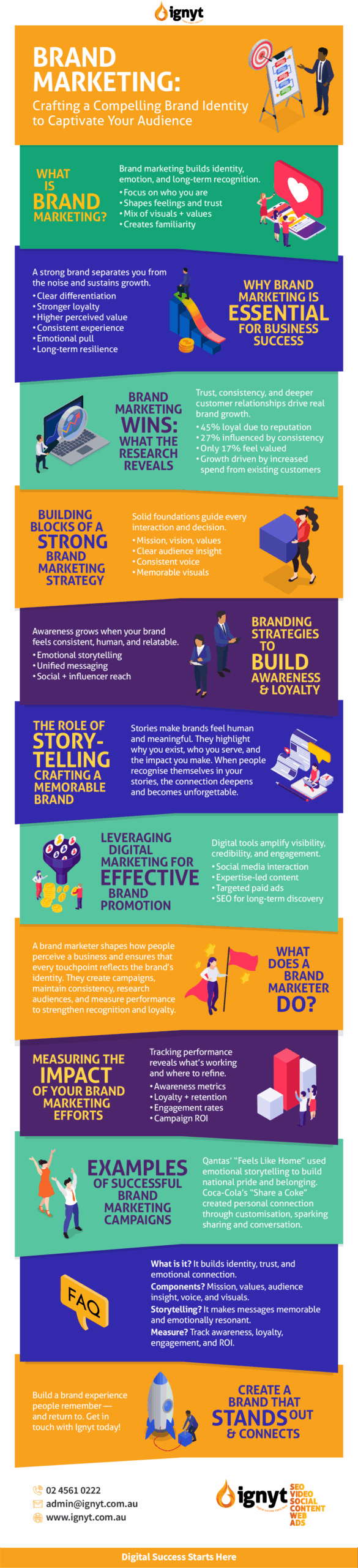
Brand marketing is the practice of promoting your business by focusing on who you are, not just what you sell.

Unlike general marketing, which often highlights specific products, services, or short-term campaigns, brand marketing builds a bigger picture. 

At its core, brand marketing tells the story of your business, communicates your values, and shapes how people feel when they think of you.

It’s about creating an emotional connection with your audience that makes them choose you over another business, because they believe in what you stand for and feel a sense of trust and familiarity.

This type of marketing combines both tangible and intangible elements.

Tangible elements include the things people can see: your logo, colour palette, and visual style. Intangible elements showcase the personality behind your brand: your mission, values, and voice

Why-Brand-Marketing-is-Essential-for-Business-Success

Why Brand Marketing is Essential for Business Success

  • Differentiation in a crowded market. A well-defined brand helps you stand out from the crowd. When your identity is clear, customers can more easily choose you over competitors.
  • Increased customer loyalty and retention. Brand marketing helps you build relationships, not just transactions. People are more likely to stick with brands they trust.
  • Higher perceived value and pricing power. Strong brands often command premiums. People pay more when they see value, not just price.
  • Consistency across every interaction. When your website, social media, ads, and customer service all share the same style and message, people recognise your brand faster and remember it longer.
  • Emotional connection and deeper engagement. A brand with compelling values, purpose, and voice draws people in on trust, not just logic.
  • Long-term sustainability and resilience. When the market shifts or costs rise, a strong brand gives you flexibility to keep customer loyalty, adapt to change, and hold your position without losing momentum.
Brand-Marketing-Wins-What-the-Latest-2024-25-Research-Reveals

Brand Marketing Wins: What the Latest 2024-25 Research Reveals

How does strong brand marketing translate to real impact?

A recent Customer Loyalty Index survey of more than 2,000 Australian consumers revealed that 45% stay loyal to a brand because they trust its reputation, 27% value brand consistency, and 25% are influenced by a brand’s iconic status. 

These numbers highlight the importance of brand marketing in fostering trust, maintaining consistency, and cultivating a reputation that attracts repeat customers.

The same survey revealed that only 17% of consumers feel “truly valued” by brands they’re loyal to, indicating that many companies still fall short in establishing emotional connections and fostering retention.

According to a new study by advertising expert James Hurman and B2C CRM leader Klaviyo, brands in the Australian and New Zealand e-commerce market grew more than three times faster when their existing customers spent more over time, compared to brands that simply kept a lot of customers but didn’t increase how much those customers were spending.

This study shows that brand marketing isn’t just about keeping customers; it’s about deepening the relationship so they spend more and engage more over time.

How Brands Grow: What Marketers Don’t Know

Many marketers assume growth is all about bigger budgets, more ads, or chasing the latest trends.

In reality, the brands that grow fastest are the ones that invest in identity and connection.

They create meaning, build trust, and give people a reason to care, instead of just pushing products.

What often gets overlooked is that growth comes from the inside out.

A strong brand identity shapes every interaction, guides decisions, and makes customers feel like they’re part of something bigger.

That’s the secret many businesses miss, and it’s where the real opportunity lies.

Building-Blocks-of-a-Strong-Brand-Marketing-Strategy

Building Blocks of a Strong Brand Marketing Strategy

Every successful brand marketing strategy rests on a few key elements. Get these right, and you’ll have a strong foundation to build on.

  1. Define your mission, vision, and values. Your mission explains why your business exists, your vision outlines where you’re heading, and your values guide how you operate. Write them down, make them clear, and use them as touchstones for every decision and campaign.
  2. Know your audience. Go beyond demographics. Identify your target audience’s goals, pain points, and buying habits, as well as what they care about and how they prefer to engage. The more you understand them, the easier it is to shape messages that resonate.
  3. Develop a consistent brand voice and personality. Decide how you want your brand to sound and feel. Are you approachable and friendly? Professional and authoritative? Whatever you choose, keep it consistent across your social media, emails, ads, and customer service channels so people know it’s you.
  4. Design a memorable visual identity. Your logo, colours, and typography are the face of your brand. Keep them simple, consistent, and aligned with your personality. Use them across all platforms and materials to create instant recognition.
Branding-Strategies-to-Build-Awareness-and-Loyalty

Branding Strategies to Build Awareness and Loyalty

Once your brand foundations are in place, the next step is making sure people know who you are and feel motivated to stick around. 

Here are some practical ways to build awareness and loyalty.

  1. Tell stories that spark emotion. Facts inform, but stories inspire. Share the journey behind your business, spotlight customer experiences, or highlight the impact you’re making. When people connect with your story, they’re more likely to connect with your brand.
  2. Keep your message clear across every channel. Your website, ads, social media, and even customer support should all reflect the same core message. When people hear the same themes and promises wherever they interact with you, it builds recognition and trust.
  3. Use social media and influencers to extend your reach. Social platforms let you showcase your personality and engage directly with your audience. Partnering with the right influencers can amplify your voice and introduce your brand to new communities in a relatable, authentic way.
The-Role-of-Storytelling-in-Crafting-a-Memorable-Brand-A-Deeper-Look

The Role of Storytelling in Crafting a Memorable Brand: A Deeper Look

People may forget facts and figures, but they remember stories.

A strong narrative helps your brand feel human, relatable, and worth remembering.

Storytelling allows you to go beyond what you sell and show why your brand exists, what it stands for, and how it makes a difference in people’s lives.

That emotional pull is what transforms casual customers into loyal advocates.

How can you weave storytelling into your brand messaging?

Share how your brand started and the mission that drives you to create authenticity and give people a reason to believe in you.

Shine a spotlight on your customers.

Real-life examples of how people use and benefit from your product or service add credibility and make your brand feel more approachable.

Build stories around situations, challenges, or goals your target audience understands.

When they see themselves in the story, they feel a deeper connection to your brand.

Leveraging-Digital-Marketing-for-Effective-Brand-Promotion

Leveraging Digital Marketing for Effective Brand Promotion

Digital marketing provides brands with the tools to reach broader audiences and establish recognition faster than ever before.

The right strategies can amplify your message and strengthen your position in the market.

Digital marketing strategies can include

  1. Social media for real engagement. Platforms like Instagram, LinkedIn, TikTok, and Facebook let you interact directly with your audience. Use them to start conversations, share behind-the-scenes content, and showcase your brand personality.
  2. Content that shows expertise. Blogs, videos, and infographics position your brand as a trusted source of knowledge and expertise. Helpful, consistent content builds authority and keeps your audience coming back for more.
  3. Paid ads to expand your reach. Digital advertising allows you to target specific groups and demographics with precision. It’s an effective way to introduce your brand to new audiences and quickly boost visibility.
  4. SEO for long-term visibility. Search engine optimisation ensures people can find you when they’re actively looking for what you offer. By appearing in search results, your brand becomes more discoverable and builds credibility over time.
What-Does-a-Brand-Marketer-Do

What Does a Brand Marketer Do?

A brand marketer is responsible for shaping how people see and experience a brand. 

Businesses often turn to a brand marketer when they feel invisible in their industry, struggle to communicate what makes them unique, or want to build stronger recognition and loyalty.

The key responsibilities of a brand marketer include

  • Defining and refining brand identity. 
  • Creating unique and relevant brand campaigns. 
  • Managing brand consistency.
  • Researching audiences and markets.
  • Measuring brand impact.
Measuring-the-Impact-of-Your-Brand-Marketing-Efforts

Measuring the Impact of Your Brand Marketing Efforts

Knowing whether your brand marketing is working comes down to tracking the numbers.

Key performance indicators (KPIs) reveal how effectively your brand is connecting with people and where you can make improvements.

Track the following KPIs.

  • Brand Awareness Metrics: Track website traffic, social media reach, and search visibility to see how many people are discovering your brand. Tools like Google Analytics and built-in social media insights make it easy to monitor these numbers over time.
  • Customer Loyalty and Retention Rates: Measure the frequency of customer returns and the average duration of customer loyalty. CRM systems and customer databases can help you calculate repeat purchase rates, customer lifetime value, and churn, so you can refine strategies that strengthen loyalty.
  • Engagement Rates on Digital Platforms: Monitor likes, comments, shares, and click-throughs to understand how actively people interact with your brand. Social media dashboards and content analytics highlight what’s working so you can adjust your messaging for more impact.
  • ROI from Marketing Campaigns: Compare what you spend on campaigns with the revenue or leads they bring in. Marketing platforms and analytics dashboards enable you to track cost per lead, cost per acquisition, and total return, so you can focus on campaigns delivering the best results.
Examples-of-Successful-Brand-Marketing-Campaigns

Examples of Successful Brand Marketing Campaigns

Qantas

One of Qantas’ most memorable campaigns was “Feels Like Home.”

The airline tapped into the deep emotion of returning to Australia, showcasing real passenger stories that captured the warmth and relief of coming back to family and familiarity.

By doing so, Qantas positioned itself as more than just a carrier.

It became a symbol of belonging and national pride, showing how powerful storytelling rooted in culture and identity can make a brand unforgettable.

Coca-Cola

Coca-Cola’s “Share a Coke” campaign is one of the most recognised examples of creative brand marketing.

They turned their well-known product into a personal experience by printing people’s names on bottles.

Customers were now looking for their own name or a friend’s name.

The campaign encouraged sharing, social interaction, and conversation, making the brand feel more connected to everyday moments.

It showed how personalisation and interaction can transform the way customers engage with a brand.

FAQs

FAQs

What Is Brand Marketing, and Why Is It Important?

Brand marketing is the process of promoting a business by building its identity, values, and personality.

It’s important because it creates recognition, trust, and emotional connection, which help a brand stand out and retain customers.

What Are the Key Components of a Brand Marketing Strategy?

The key components of a brand marketing strategy include

  • Defining a business’ mission, vision, and values
  • Knowing the target audience
  • Creating a consistent voice and personality
  • Developing a clear visual identity through elements like logos, colours, and typography

How Does Storytelling Impact Branding?

Storytelling makes branding more memorable by creating emotional connections.

Through stories, audiences relate to a brand’s purpose, values, and people, turning messages into experiences they can connect with and remember.

What Are Some Examples of Successful Brand Marketing Campaigns?

Globally, Nike’s “Just Do It” campaign built an enduring emotional connection through empowerment, inspiring people of all backgrounds to see themselves as athletes. 

In Australia, Vegemite’s long-running “Happy Little Vegemites” campaign used a catchy jingle and nostalgic storytelling to embed the brand in everyday culture and strengthen loyalty across generations.

How Do You Measure the Success of Brand Marketing?

Success in brand marketing can be measured by tracking awareness, customer loyalty, engagement, and ROI through analytics tools such as Google Analytics, social media insights, email marketing dashboards, and CRM platforms.

Create-a-Brand-That-Stands-Out-and-Connects

Create a Brand That Stands Out and Connects

Brand marketing is like hosting a party. Anyone can play music and serve food, but the parties people never forget have the right atmosphere and a story that brings everyone together.

In the same way, brand marketing sets the tone, creates the experience, and gives people an experience they want to return to again and again.

Ready to set the scene for a brand experience people won’t forget?

Ignyt can help. We craft comprehensive digital marketing strategies, including SEO, social media, content creation, and advertising.

Our strategies are designed to get your brand seen, heard, and chosen. 

Get in touch today to see what we can do for your brand!

Summary-Brand-Marketing-scaled-Infographic